Lift Force Calculator
Lift from air density, true airspeed, wing area and a lift coefficient you supply.
Aerodynamics
The basic force equations of flight: lift, drag, wing loading, turn radius and load factor. Coefficients and stall speeds are always values you supply, so the pages work as a way to explore how each term changes the result.

Lift from air density, true airspeed, wing area and a lift coefficient you supply.
Aerodynamics
Drag from air density, true airspeed, reference area and a drag coefficient you supply.
Aerodynamics
Wing loading from aircraft mass and wing area, in kg/m², lb/ft² and N/m².
Aerodynamics
Radius and rate of a level coordinated turn from true airspeed and bank angle.
Aerodynamics
Load factor in a level turn from bank angle, and the matching rise in stall speed.
Aerodynamics
Aerodynamics
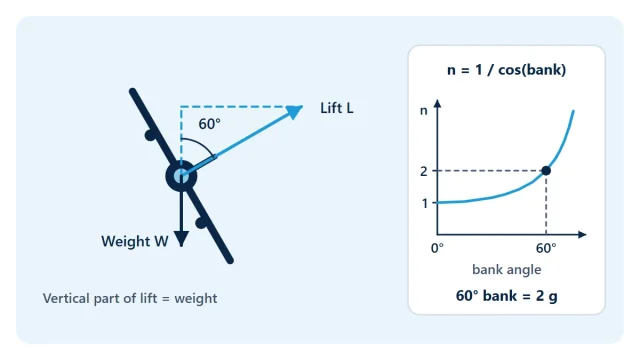
Load factor is lift divided by weight. In a level turn it equals 1 ÷ cos(bank), and stall speed rises with its square root.
Aerodynamics
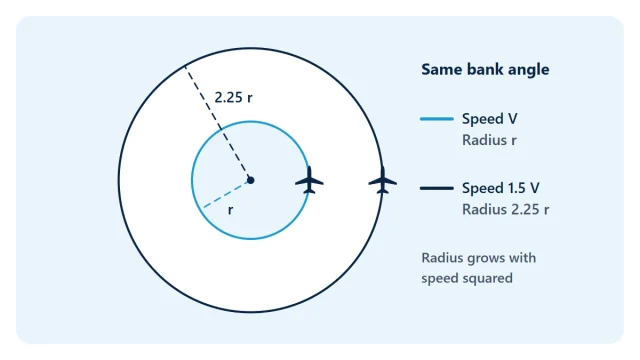
Turn radius depends only on true airspeed and bank angle. See why doubling the speed quadruples the radius and what steeper bank costs.
Aerodynamics
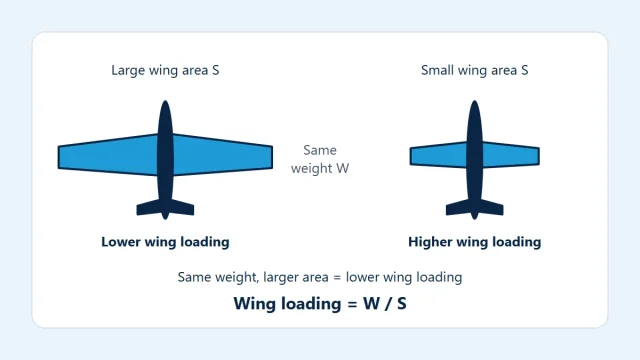
Wing loading is aircraft weight divided by wing area. Learn how that one ratio shapes stall speed, turning ability and the ride in rough air.
Aerodynamics
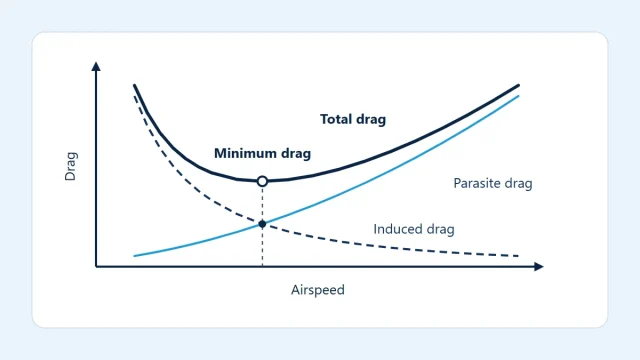
Parasite drag rises with the square of speed and induced drag falls with it. See how the two add up to a total drag curve with a minimum.
Aerodynamics
How a wing produces lift by turning the air and creating a pressure difference, and what each term in the lift equation does to the result.